 StoryWell Books
20 February 2026 · Education
Language, Culture & Representation in Children's Books
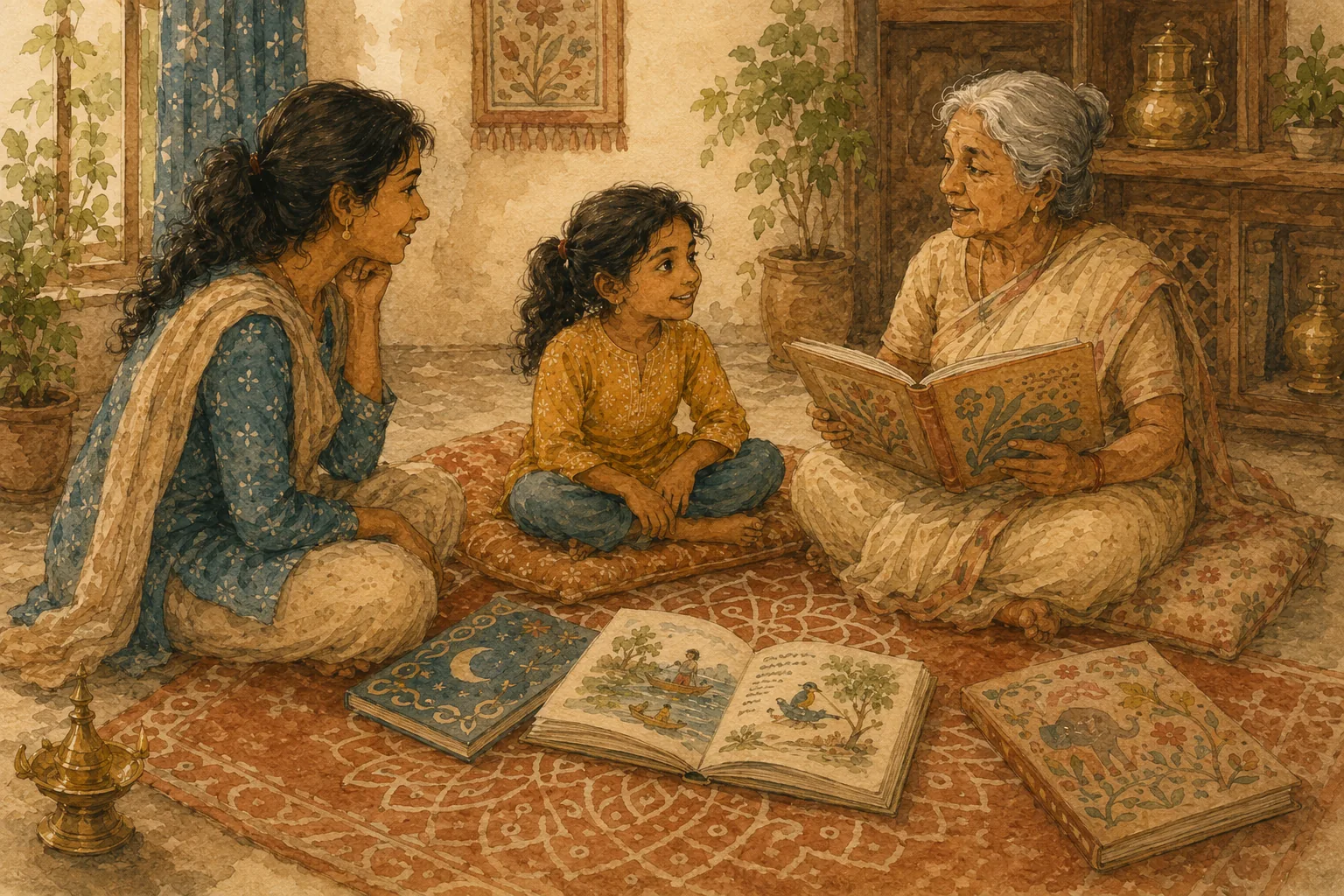
India has twenty-two official languages. Most Indian children grow up speaking at least two, and often three. A child in Hyderabad might hear Telugu at home, English at school and Hindi on television. A child in Kerala moves between Malayalam and English without a second thought. By any global standard this is remarkable, and for Indian children it is the ordinary starting point.
Our bookshops, by and large, present bilingualism as something exotic. Hindi-English books sit in a corner, multilingual titles are rare and English dominates the shelves.
At StoryWell, we've built a whole series, the Padho Padhao / Ram Series, around bilingual learning. Shabdmala teaches words in two languages. Vakyamala teaches sentences. Come, Let Us Teach Ammi to Read is as much about the adult learning alongside the child as it is about the child learning.
What reading in two languages builds
Children who read in more than one language develop stronger metalinguistic awareness: they understand how language works, as well as what words mean. In my own academic work on children's cognitive development, I've seen how multilingualism shapes the plasticity of young minds.
The emotional side
The benefit that is hardest to measure is emotional. A child who reads their grandmother's language stays connected to their grandmother's world, because language carries memory and belonging.
When we produce a book in two languages, we reach a wider audience, and we tell a child that their world, in all its linguistic fullness, belongs in books.