 StoryWell Books
22 May 2026 · Parenting
Bringing Families Together Through Stories
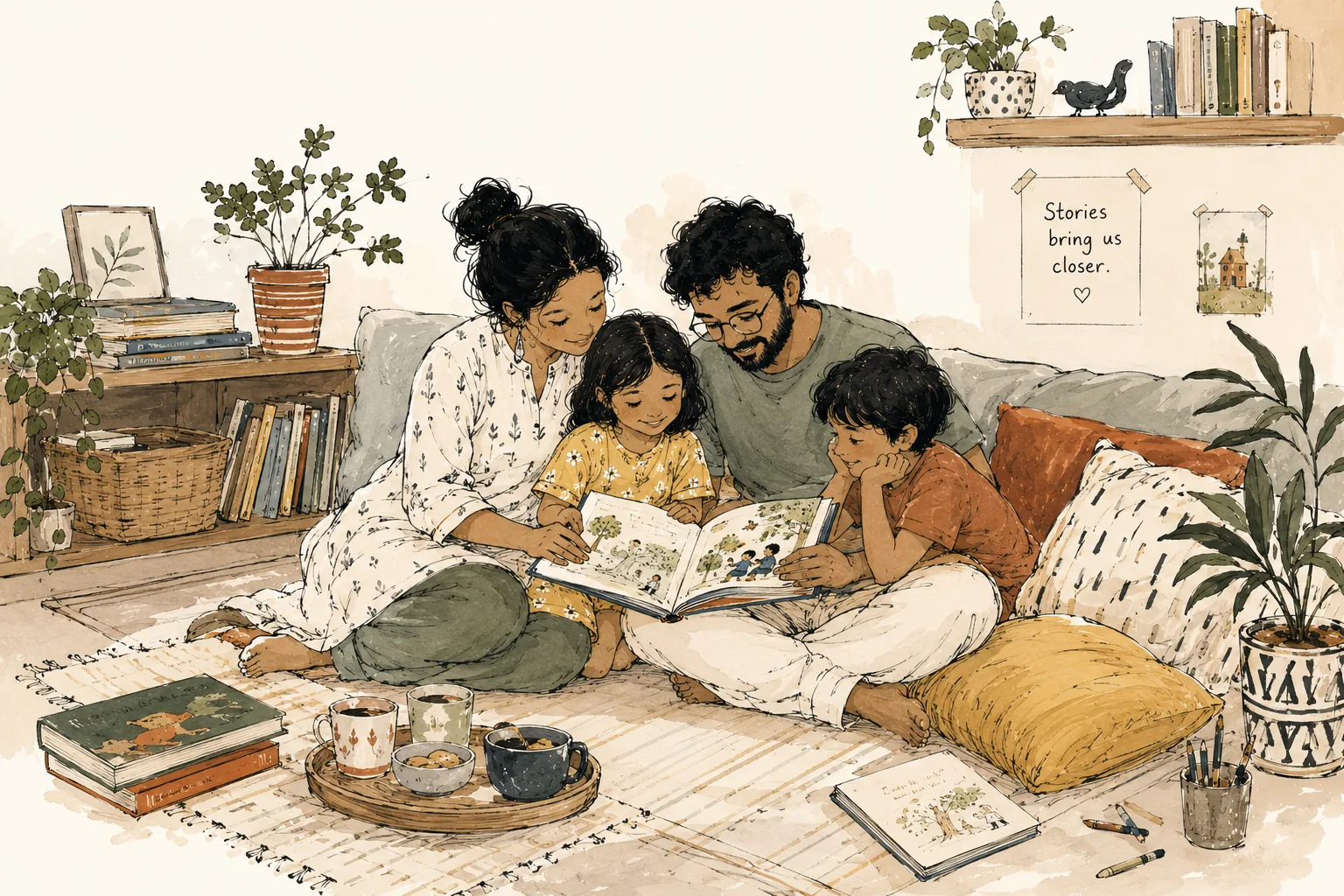
Parents often tell us, a little guiltily, that they don't read to their children 'as much as they should'. They picture an ideal: a serene half-hour, a hushed room, a rapt child. Real life rarely offers that, and a good reading habit does not need it.
Regularity builds a reader more reliably than length does. Ten unhurried minutes, most days, will do more than a rare and dutiful hour.
Anchor it to something you already do
The easiest habits are the ones attached to something you already do. Read after brushing teeth. Read before the afternoon nap. Read while the dal simmers. When reading has a fixed place in the day, nobody has to decide each evening whether to do it.
Let them choose (yes, again)
If your child wants the same book for the fortieth night running, let them. Children repeat a story to master it, and they enjoy knowing what comes next. The night they finally choose something new, you'll know the old book did its work.
Keep it cosy
Reading time is for enjoyment. Don't quiz, correct pronunciation or stop to test comprehension. Curl up, do the silly voices and follow the tangents ('why is the moon awake?'). The warmth of the moment is what matters, and the vocabulary and comprehension come along for free.
Keep books within reach
Keep a basket of books by the sofa, a small shelf at child height and a couple of paperbacks in the car. When books are visible and available, reading becomes the easiest thing to do instead of a special event that needs setting up.
When you miss a day
Everyone misses a day now and then, and one missed day leaves the habit intact. Pick the book up again tomorrow and read for ten minutes.