 StoryWell Books
15 January 2026 · Publishing
How Print-on-Demand Is Changing Indian Publishing
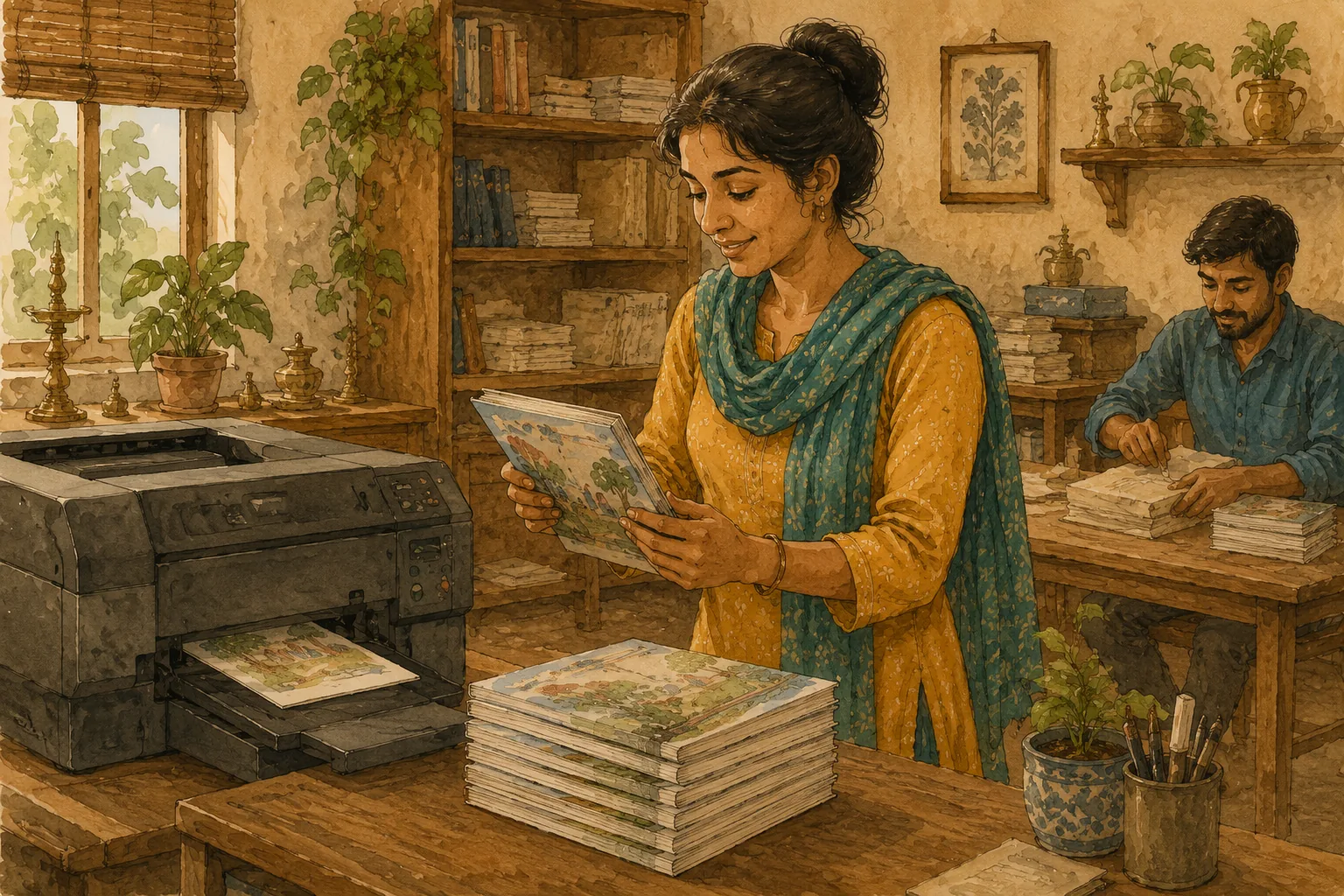
For most of publishing's history, printing a book meant committing to a print run of five thousand, ten thousand, sometimes fifty thousand copies. A publisher had to be convinced that a book would sell those numbers before it went to press. This system worked for bestsellers and failed nearly everything else. Mid-list books went out of print. First-time authors got one shot, and if their debut did not sell, they were finished. Unusual, experimental or regionally specific books rarely got printed at all.
Print-on-demand changes that.
What it means
When you order a StoryWell book, it is printed for you, often within days. That leaves no warehouse of unsold inventory and no pulping of books that did not sell fast enough. A title never goes permanently out of print.
Why it matters for authors
A book like Agnikanya, thirteen biographies of women freedom fighters, might not have made economic sense in the old model, because a big publisher would call it too niche. With print-on-demand it does. So does God on the Hill, about India's prehistoric dolmens, and so do books written by children, in bilingual formats, about Kolam geometry or the Appu Ghar amusement park.
Why it matters for readers
Every book we've ever published is still available, so you will never hear from us that a title is out of print.
The trade-off
Print-on-demand takes a little longer: three to five business days to print, then shipping. In exchange you get a book that was made for you, in a country where publishing has historically been controlled by a handful of gatekeepers in three or four cities.
We think that's a trade worth making.